
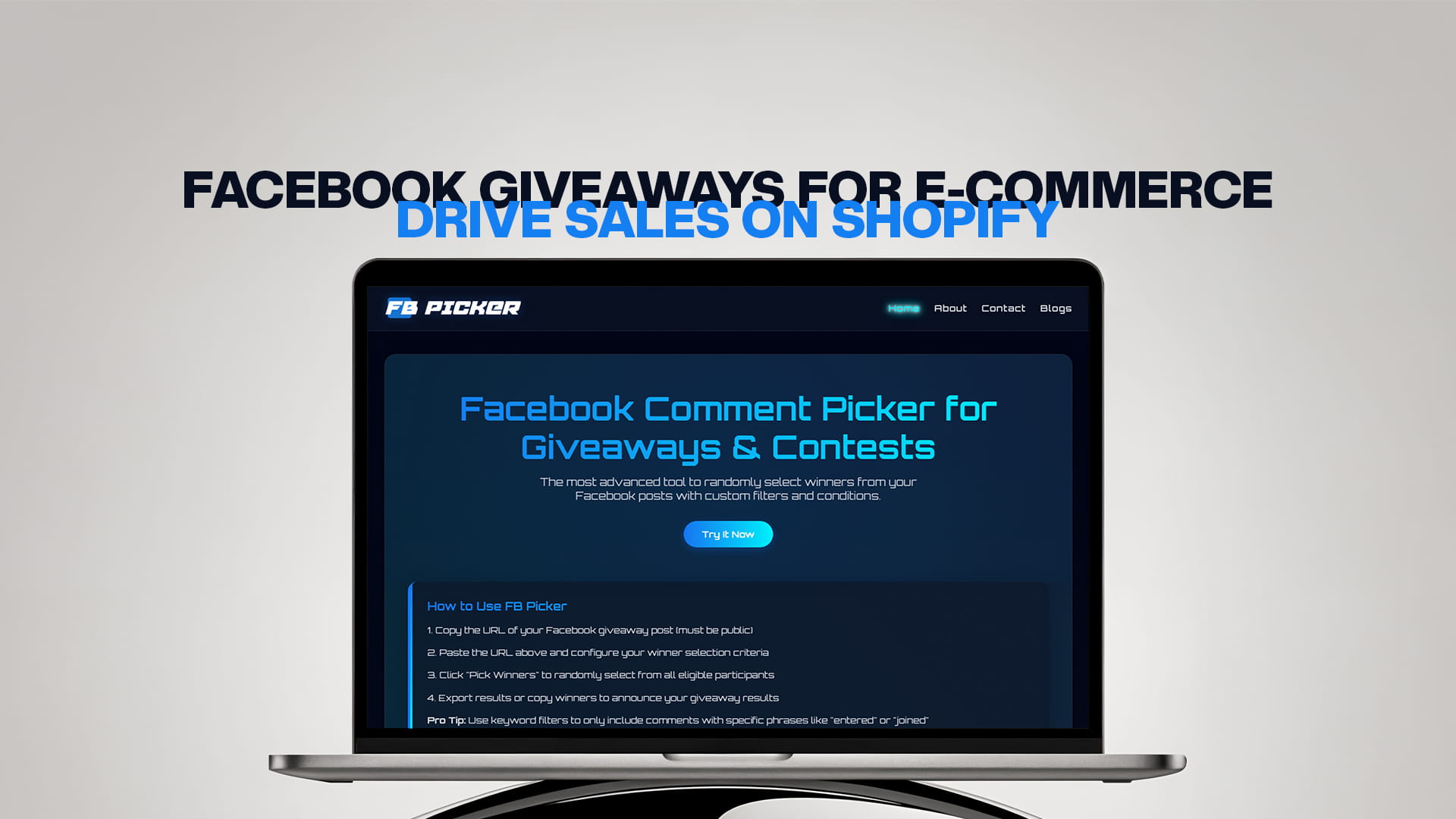
Facebook Giveaways for E-commerce: Drive Sales on Shopify
For an online store, a giveaway is rarely about the prize. It's about everything that happens around it: the email addresses you collect, the followers who become customers, the user-generated content you can reshare, and the discount codes that turn entrants into buyers. A well-run giveaway is one of the cheapest ways to feed the top of your funnel, and for a Shopify store it can plug directly into the systems you already use to sell.
The mistake most stores make is treating the giveaway as the whole campaign. They get a thousand comments, pick a winner, and move on, leaving the real value, the list and the sales, on the table. This guide is about building the giveaway as a sales engine, not a popularity contest: choosing prizes that attract buyers, wiring the contest into your store, and measuring whether it actually moved revenue.
Why giveaways work for online stores
E-commerce giveaways do several things at once that are expensive to buy any other way. They grow your audience with people who are interested in your products, not random prize hunters, if you choose the prize well. They generate social proof, because a flood of comments and tags signals popularity to everyone who sees the post. They produce content, especially if you ask for photos or reviews. And they give you a reason to collect emails and re-engage everyone who entered, whether or not they won.
That last point is the quiet superpower. A giveaway is one of the few moments when people happily raise their hand and say "I want what you sell." Your job is to capture that interest and convert it, not to let it disappear after the draw.
Prize ideas that attract buyers, not freebie hunters
The golden rule of e-commerce giveaway prizes: give away your own product. A generic prize like a tablet or a cash card pulls in thousands of people who will never buy from you. Your own product pulls in people who already want what you sell, and it costs you your wholesale price rather than retail. Every entrant becomes a qualified lead.
From there you have options. A product bundle or "ultimate kit" raises the perceived value and shows your range. A choose-your-own prize lets the winner pick from your catalogue, which doubles as a signal of what people want most. Store credit or a gift card keeps the prize on-brand while feeling flexible, and it almost always leads to a purchase above the credit value. A subscription or a year of a consumable product builds a long relationship and a strong shot at converting the winner to a paying repeat customer. And a new-launch giveaway, giving away a product before it's released, builds pre-launch buzz and a waitlist at the same time.
A mystery box is the budget-friendly wildcard: curiosity drives entries, and you control the contents and cost. Whatever you pick, keep it tied to your store. The prize is a filter, and a relevant prize filters for buyers.
Giveaway formats that drive sales
Different formats serve different goals. For pure reach, a tag-a-friend giveaway spreads your post to new people who match your existing audience. For content and social proof, a photo or review contest asks customers to share your product in action, giving you a library of authentic UGC you can reshare for months. For a product launch, a giveaway built around the new item creates demand before it's even for sale. For partnerships, teaming up with a complementary brand splits the prize cost and taps a fresh but relevant audience.
And for the calendar, seasonal giveaways around your big retail moments, Black Friday, the holidays, a summer sale, give you a reason to post and a way to warm up an audience right before you ask them to buy. Run the draw on these with a random comment picker for giveaways so the selection is fast and transparent even when entries spike into the thousands.
Wiring the giveaway into your Shopify store
This is where e-commerce giveaways earn their keep, and where most stores under-deliver. The contest lives on Facebook, but the value flows into your store, so connect the two deliberately.
The highest-impact move is a code for everyone who entered. When you announce the winner, give every other entrant a reason to buy now: "Thanks to everyone who entered, here's 15% off this week only." You've just turned a single winner into a wave of potential orders from people who already showed interest. This one habit often returns more revenue than the giveaway cost in prizes.
Capture emails the right way. A giveaway is a natural list-builder, but be careful about how you do it. You can invite entrants to join your list, but you can't force marketing sign-up as a condition of entry, especially under privacy rules like GDPR, where consent has to be a separate, voluntary choice. Offer it, don't require it.
Use your retargeting. Everyone who engages with your giveaway post is a warm audience you can retarget with ads afterward, often far more cheaply than cold traffic. And point your follow-up at a real destination: a landing page, a collection, or the product featured in the prize, so the interest you generated has somewhere to go.
Measuring whether it actually worked
Vanity metrics will lie to you. Comments and new followers feel like success, but for a store the questions that matter are: how many emails did we add, how many entrants used the consolation code, and what revenue came from this in the two weeks after? Tag your consolation code so you can track orders straight back to the giveaway. Watch new-customer purchases, not just total sales. And compare the cost, prize plus your time plus any ad boost, against the revenue and the list growth. A giveaway that adds 600 engaged emails and drives 40 orders is a winner even if the comment count looked modest.
Staying compliant
E-commerce giveaways are sweepstakes, and the rules are straightforward if you respect them. Keep entry free, no purchase necessary, because requiring a purchase to enter turns your giveaway into an illegal lottery in many places. Publish clear official rules with eligibility, dates, prize value, and how the winner is chosen, and include the disclaimer that the promotion isn't sponsored by or associated with Facebook. Handle entrant data lawfully and keep marketing consent separate from entry, particularly for customers in the EU and UK. And lean on commenting and following rather than required shares, which Meta now discourages.
Picking the winner fairly and at scale
A popular store giveaway can pull thousands of comments, which is exactly where hand-picking falls apart and looks suspect. FB Picker handles volume cleanly: paste your post URL, it pulls every comment, you remove duplicate entries and filter for your keyword if you used one, and it selects the winner at random in seconds. If you ran tiered prizes or want backups, you can pick multiple winners in a single pass, and you can export the entrant and winner lists for your records. Record the draw and share it, transparency turns a one-time contest into a reason people trust your store enough to enter the next one.
How to run a launch giveaway, step by step
A product-launch giveaway is one of the highest-leverage formats for a store, so it's worth structuring well. Start a week or two before the product goes live. Build the post around the new item, a sharp photo or a short video, and make the prize the product itself, so the people entering are exactly the people you want buying it. Set your entry actions to comment and follow, and ask a question that doubles as research: "comment which colour you'd pick" or "tell us what you'd use this for." You collect entries and product feedback in the same motion.
Run it right up to launch day, and time the close to coincide with the product going on sale. Announce the winner, then immediately give every other entrant a launch-week code, so the demand you built converts into first-day orders instead of fading. Because you asked a question during entry, you also walk away with a list of the variants people want most, which helps you stock and merchandise. Done this way, the giveaway doesn't just promote the launch, it warms up a buyer list and de-risks your inventory decisions at the same time.
Turning entrants into repeat customers
The follow-up matters as much as the giveaway. Map out what happens in the two weeks after the draw, because that's when the revenue is won or lost. Send the consolation code promptly while interest is high, and point it at the featured product or a relevant collection rather than your homepage. For entrants who opted into your list, add them to a short welcome sequence: a thank-you, the story behind the brand or the product, and a gentle nudge to use their code before it expires. Retarget everyone who engaged with the post through ads, since they're a warm audience that converts far more cheaply than cold traffic. And keep the door open, invite entrants to follow for the next giveaway, so each contest compounds your audience instead of resetting it.
Common mistakes online stores make
A handful of errors quietly drain the value from store giveaways. Choosing a generic, high-value prize like a games console pulls in thousands of freebie hunters who never buy, so a relevant product prize almost always outperforms it on revenue. Forgetting the consolation code leaves the warmest audience you'll ever have with no reason to purchase. Forcing marketing sign-up as a condition of entry breaks privacy rules like GDPR and can sour new contacts, so always keep consent separate and voluntary. Measuring success by comments and followers instead of emails, code redemptions, and orders hides whether the giveaway actually paid off. And neglecting the post-giveaway window, the two weeks where buying intent is highest, is the most expensive mistake of all. Fix those and a giveaway stops being a fun distraction and starts being a reliable channel.
Run them on a cadence, not just once
A single giveaway is a spike; a rhythm of them is a channel. The stores that get the most from giveaways treat them as a recurring part of their calendar rather than a one-off stunt. Plan a few across the year, a product-launch giveaway when something new drops, a tag-a-friend reach push before a big sale, a thank-you giveaway at a follower milestone, and a seasonal contest around your busiest retail moment. Each one grows the audience and email list that the next one starts from, so the results compound instead of resetting to zero every time. Keep a simple record of what you gave away, the entry count, the emails added, and the orders that followed, and you'll quickly see which formats and prizes pull their weight. Over a year, a steady cadence of well-run giveaways becomes one of the cheapest reliable sources of new customers a store has.
The bottom line
For an online store, the giveaway is the start of the work, not the end. Choose a prize from your own catalogue so you attract buyers instead of freebie hunters, pick a format that matches your goal, and wire the contest into Shopify with a consolation code, smart email capture, and retargeting so the interest converts to revenue. Measure the outcomes that matter, emails, code redemptions, and new-customer orders, rather than the comment count. Run the draw transparently with a capable free comment picker and giveaway tool, and you'll have a repeatable engine that grows your list and your sales at the same time.