
Facebook Giveaway Ideas for Small Businesses
Small businesses run giveaways under constraints big brands never think about. There's no marketing team, so whatever you run has to fit around actually serving customers. There's no prize budget to speak of, so a $500 gadget is off the table. And the audience isn't millions of strangers; it's a few hundred or a few thousand locals whose opinion of you travels by word of mouth through the same town you live in. The good news is that none of those constraints hurt you if you design around them, and some, especially the local, tight-knit audience, are genuine advantages a national brand would pay dearly for.
This guide is built for those constraints: giveaway ideas that cost little, take an hour a month to run, reach the local people who can actually become customers, and end with a draw your community trusts. No platform subscriptions, no campaign infrastructure, just formats that work at small-business scale.
Why small businesses punch above their weight
Before the ideas, it's worth naming why giveaways reward small businesses disproportionately. First, your audience converts. A national brand's new follower is a statistic; your new follower lives ten minutes away and can walk in on Saturday. Every unit of reach a small business gains is worth more, because it's reach among people who can actually buy. Second, trust compounds locally. When your regulars watch you run a fair, generous contest, they talk about it, at work, at school pickup, in the neighborhood group, and local word of mouth is the cheapest, most credible marketing that exists. Third, small prizes work. Your audience doesn't need a luxury reward to engage; a free product, a service voucher, or a themed basket from a business they already like is genuinely exciting in a way it wouldn't be from a faceless corporation.
Low-budget prize ideas that feel generous
The trick is perceived generosity at low real cost, and small businesses have several levers.
Your own product or service is the anchor, and it costs you wholesale, not retail. A free haircut, a dozen cupcakes, an oil change, a month of classes: each feels substantial to the winner while costing you a fraction of its face value, and each puts a potential regular through your door.
A themed basket of small items beats one mid-priced item at the same cost. Five modest products photographed together look abundant; one $40 item looks like one $40 item.
A gift card to your own business is the flexible fallback, and it has a quiet bonus: winners routinely spend beyond the card's value once they're in.
Donated and partner prizes cost you nothing. Neighboring businesses will often contribute a prize in exchange for a tag and a thank-you, especially if you return the favor; more on partnering below.
An experience or "VIP" touch, first taste of a new menu item, a behind-the-scenes hour, naming a new product, costs almost nothing and can excite a loyal local audience more than merchandise ever would.
Giveaway formats built for small-business scale
These formats are ranked roughly by effort, and all of them can be run by one person in spare moments.
The classic local comment contest is your bread and butter: "Like this post, follow our page, and comment [an easy question] to win [prize]." An opinion question tied to your business, favorite flavor, dream project, or best local spot, gets more comments than "comment to enter," and every comment pushes the post into more local feeds.
The tag-a-neighbor giveaway converts your audience's social graph into reach: "Tag someone local who'd love this." Each tag introduces your business to someone nearby, which is precisely the audience you want and precisely the audience national advertising can't efficiently buy.
The partner cross-promotion is the small business superpower. Team up with one or two complementary neighbors, the florist and the bakery, the gym and the smoothie bar, pool a prize, and require entrants to follow all partners. You each reach the others' audiences, split the prize cost, and strengthen a relationship that pays off far beyond the contest. For a small business, borrowing a neighbor's followers is the fastest legitimate audience growth available.
The milestone thank-you marks a follower count or anniversary with a giveaway framed as gratitude. It costs the same as any contest but reads as generosity rather than marketing, which suits a small business's voice perfectly.
The photo contest, entrants share a photo with your product or at your location, takes more effort from entrants but hands you authentic local content you can reshare for months. Save it for an engaged audience and a prize worth the effort.
Run any of these with a random comment picker for giveaways, and the draw itself takes about a minute, which matters when marketing happens between customers.
A realistic monthly rhythm
You don't need a campaign calendar, just a sustainable habit. One giveaway a month is plenty for most small businesses: enough to keep the page lively, not so much that contests lose their shine or eat your week. Rotate formats so it never goes stale: a comment contest this month, a partner giveaway next, a milestone thank-you when you hit a round number. Aim prizes at your slow periods; a Tuesday-only voucher fills the seats you actually need filled. And keep each contest to about a week: long enough to spread through local networks, short enough to stay urgent. Total time cost, done efficiently: an hour to plan and post, a minute to draw, a few minutes to announce and follow up. That's a marketing channel that fits inside a lunch break.
Fitting giveaways to your local calendar
The other advantage small businesses hold is calendar intimacy: you know your town's rhythm in a way no national brand can. Use it. Time a giveaway to the local school holidays, the summer festival, the farmers-market season, the week the college students return, moments when community attention is already gathered and a locally-flavored contest rides the wave for free. A "back to school survival kit" from a café near campus, a "festival weekend picnic bundle" from a deli two streets from the fairground: these land in a way no generic seasonal post can, because they're written by someone who's actually there.
The same intimacy helps with slow-season planning. Every local business knows its dead weeks, the January lull, the mid-summer exodus, and the stretch after the holidays, and those are exactly where a giveaway earns the most, because the consolation offers and winner visits land on days you'd otherwise have empty. Sketch your next twelve months, mark the three or four moments where a contest would either ride a local wave or fill a known gap, and you have a giveaway calendar that took ten minutes and beats anything a big brand's planning software would produce for your town.
The follow-through that turns entries into customers
For a small business, the giveaway's real payoff is everyone who didn't win, because they're all local, all interested, and all one nudge from visiting. When you announce the winner, thank every entrant and give them a reason to come in anyway: a small discount, a free add-on with purchase, a "mention this post" perk valid for two weeks. That single habit routinely converts more revenue than the prize cost. Then close the loop publicly, congratulate the winner by name, and when they claim the prize, ask permission to share a photo. A beaming local winner holding your product is the most persuasive ad your business will run all year, and it seeds the audience for the next contest.
Keeping it fair when everyone knows everyone
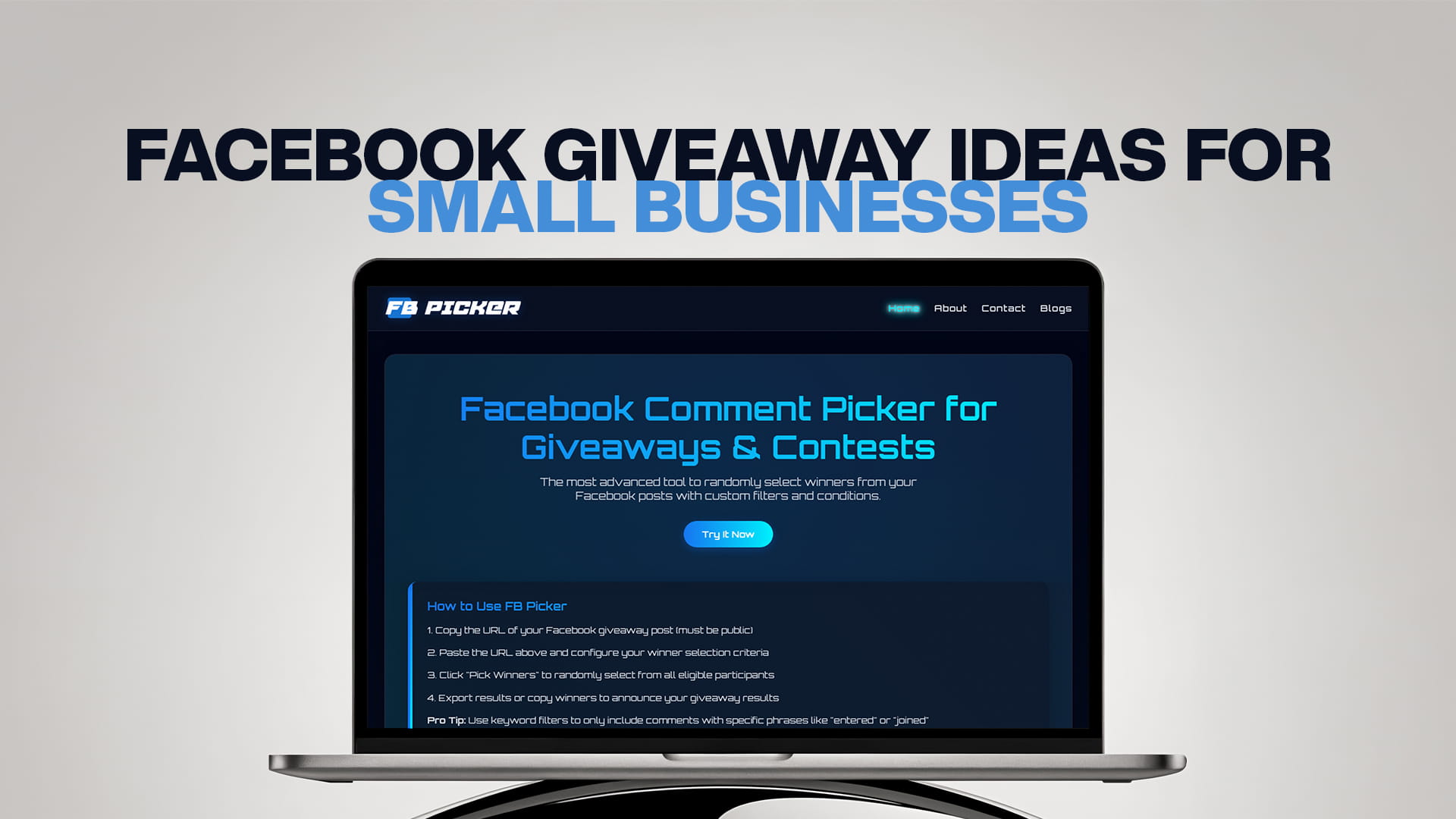
Here's a wrinkle unique to small businesses: your entrants include friends, regulars, and people you'd recognize on the street, which makes a hand-picked winner look suspicious even when it isn't. In a small community, one whisper of "they just gave it to their friend" costs more than the giveaway earned. The fix is to make the draw visibly random. FB Picker works from your post's public URL with no account or login, pulls in every comment, removes duplicates so nobody wins by spamming, and selects the winner at random on screen. Record the draw with your phone's screen recorder and post the clip with the announcement, thirty seconds of visible fairness that ends every possible whisper before it starts. If you're giving several small prizes, you can pick multiple winners in the same pass. And because it's free, it fits the small-business budget perfectly, which is to say, it doesn't touch it. The best free Facebook comment picker approach costs nothing but the minute it takes.
The rules, kept simple
The compliance basics are quick for a small giveaway but still mandatory. Keep entry free, never require a purchase. Include the essentials in your post or a linked note: who can enter (your local area is fine and sensible), start and close dates with a time zone, the prize, and how you'll pick the winner. Add the line that the promotion isn't sponsored, endorsed, or associated with Facebook, Meta requires it. Ask for comments, follows, and friend tags rather than requiring shares. And if your prize involves alcohol, check your local rules, since alcohol prizes carry extra restrictions in many places.
The bottom line
Small businesses don't need big budgets to run giveaways that work; they need formats matched to their real advantages: a local audience that converts, neighbors willing to partner, prizes that cost wholesale and feel like retail, and a community where visible fairness builds a reputation money can't buy. Run one modest, well-executed contest a month, follow through with an offer for everyone who entered, and draw the winner in the open with a free tool your whole town can watch. Do that consistently for a year and the compound effect- more followers, more first visits, more word of mouth- will outperform almost anything else an hour a month can buy.
Frequently Asked Questions
Often nothing beyond wholesale cost. Your own product or service, a gift card to your business, or a partner-donated prize all feel generous while costing far less than face value. Relevance to your business matters more than price; an on-brand prize attracts future customers rather than prize hunters.
Once a month is a sustainable sweet spot for most: frequent enough to keep the page active, rare enough to stay special, and fit around running the business. Rotate the format each time and aim prizes at your slow days or seasons.
Use tag-a-neighbor mechanics; each tag shows your business to someone nearby, and partner with complementary local businesses to pool prizes and swap audiences. Local reach converts far better for a small business than broad reach ever could.
Draw the winner with a random picker and record the selection on screen, then post the clip with your announcement. In a small community where entrants include friends and regulars, visible randomness is the only announcement that ends speculation completely.
Yes, briefly. State who can enter, the dates and time zone, the prize, and how the winner is chosen; keep entry free, and include Facebook's required non-affiliation disclaimer. It takes five minutes and protects you if a winner goes silent or anyone disputes the result.