
Ecommerce Facebook Giveaway Ideas That Convert
Any giveaway can collect comments. The ones worth running for an online store do something harder: they turn entrants into buyers. That distinction should shape every choice you make, because a contest optimized for raw entries fills your thread with prize hunters who vanish after the draw, while a contest optimized for conversion fills it with people one nudge away from an order. Same effort, wildly different revenue.
This is an idea list built around that second kind of contest. Twelve giveaway formats for ecommerce stores, each with the mechanic, the reason it converts rather than just engages, and the follow-through that captures the sale. Pick the ones that fit your catalog and calendar, and skip anything that only promises "engagement."
What makes a giveaway convert
Three properties separate converting giveaways from noisy ones. The prize is your product, so every entrant is, by definition, someone who wants what you sell, entering is a declaration of purchase intent. The entry action generates buying signals, a comment naming a favorite product or a preferred variant tells you exactly what each entrant would buy. And the ending sells, because the moment you announce a winner, everyone who didn't win gets a reason to buy anyway, while their interest is at its peak. Keep those three in mind and you can evaluate any idea, including ones not on this list, in seconds.
Twelve ideas that convert
1. The "comment your pick" giveaway. Post three to five products and ask entrants to comment which one they'd choose to win. The winner gets their pick. Why it converts: every single comment is a self-declared product preference, which means your consolation offer can be precisely targeted, "didn't win? Here's 15% off the item you picked." Few mechanics generate cleaner purchase-intent data for free.
2. The launch-week giveaway. Give away the new product in the week before it drops, with entry via a comment answering "what would you use it for?" Why it converts: it builds a warm audience for launch day and hands you a comment thread full of use cases you can quote in your product page and ads. Close entries as the product goes live and hit every entrant with a launch code.
3. The cart-builder gift card. The prize is store credit, and the entry question is "what's the first thing you'd add to your cart?" Why it converts: entrants literally rehearse shopping at your store to enter, and the winner almost always spends past the card's value. The comments double as a bestseller-demand survey.
4. The bundle-your-own giveaway. Show your range and ask entrants to comment their dream three-item bundle. Why it converts: it makes people browse your catalog to enter, teaches them your product names, and surfaces bundle combinations you can actually merchandise afterward. The winning bundle becomes a limited "as voted" bundle you sell.
5. The review-to-enter contest. Past customers enter by commenting a mini-review of something they bought. Why it converts: you harvest authentic social proof in public, where every browsing non-customer reads it, and reviews are among the highest-converting content an ecommerce store can display. Reward the winner well; this entry asks for real effort.
6. The photo-with-product UGC contest. Customers post a photo using your product. Why it converts: a thread of real people enjoying your product is a wall of social proof, and the photos, with permission, become months of ad creative that outperforms studio shots. Best run once or twice a year to an engaged audience.
7. The "tag who needs this" giveaway. Classic tagging, but with a conversion twist: the winner and the tagged friend both receive the prize. Why it converts: doubling the prize doubles the motivation to tag genuinely rather than randomly, and each honest tag delivers your product to the feed of a pre-qualified prospect, someone whose friend believes they'd want it.
8. The restock-alert giveaway. When a sold-out favorite returns, give one away and ask entrants to comment if they missed it last time. Why it converts: it converts the disappointment of the sellout into a warm list for the restock, and the consolation message, "it's back, here's early access", lands on people who already tried to buy once.
9. The seasonal-bundle countdown. In the run-up to a peak season, holiday, summer, back-to-school, give away the season's bundle with a closing date just before the buying window peaks. Why it converts: your announcement plus consolation code arrives exactly when entrants are about to spend anyway, so you're capturing purchases that were coming, and directing them to your store.
10. The mystery-box teaser. Give away a mystery box of your products, with entrants guessing the contents in the comments. Why it converts: curiosity drives entries cheaply, the guesses tell you which products people hope you sell, and the box-opening reveal, posted after the draw, is a second piece of content showcasing the range.
11. The subscriber-appreciation draw. A giveaway open to everyone, with the framing that it celebrates your customers and email family. Why it converts: it warms your owned audience, invites entrants to join the list voluntarily (never as a forced condition of entry), and reminds lapsed customers you exist right before your next campaign.
12. The abandoned-favorite poll giveaway. Ask "which product have you been eyeing but haven't bought yet, comment it to win it." Why it converts: it surfaces the exact hesitations sitting in your audience, and your consolation code lands as a nudge on precisely the item each person was already circling. It's retargeting, executed as a comment thread.
Building a converting rotation
You won't run all twelve, and you shouldn't. The stores that get the most from giveaways settle into a rotation of three or four formats matched to their calendar: perhaps a "comment your pick" contest as the monthly workhorse, a launch giveaway whenever a product drops, a seasonal-bundle countdown before each peak buying window, and a UGC photo contest once a year when the audience is warm enough to put in the effort. Rotation keeps the mechanics fresh for your audience while letting you refine each format's execution, your second launch giveaway will convert better than your first, because you'll have learned which entry question, which code expiry, and which announcement timing your particular customers respond to.
Treat the first run of any format as a test with a budget you'd happily lose. Give it a tracked code, run it exactly as designed, and compare its orders-per-entrant against your current best format. Ideas that win a spot in the rotation earn it on revenue; ideas that produce comments but no redemptions get retired without sentiment. Within three or four contests you'll know your store's personal conversion hierarchy, which is worth more than any generic list, including this one.
Closing the loop: the part that actually converts
Every idea above shares the same final step, and skipping it forfeits most of the value. Within an hour of announcing the winner, send the consolation offer: a time-limited code, ideally tied to whatever each entrant said they wanted, linking directly to the product or collection, never to your homepage. Purchase intent decays fast, so the offer lands while the giveaway is still in people's heads. Track the code so you can measure revenue per contest, and judge each idea by orders and email growth, not comment counts. A giveaway with 300 comments and 40 orders beats one with 3,000 comments and 5, and only tracking tells you which you ran.
The draw that protects the sale
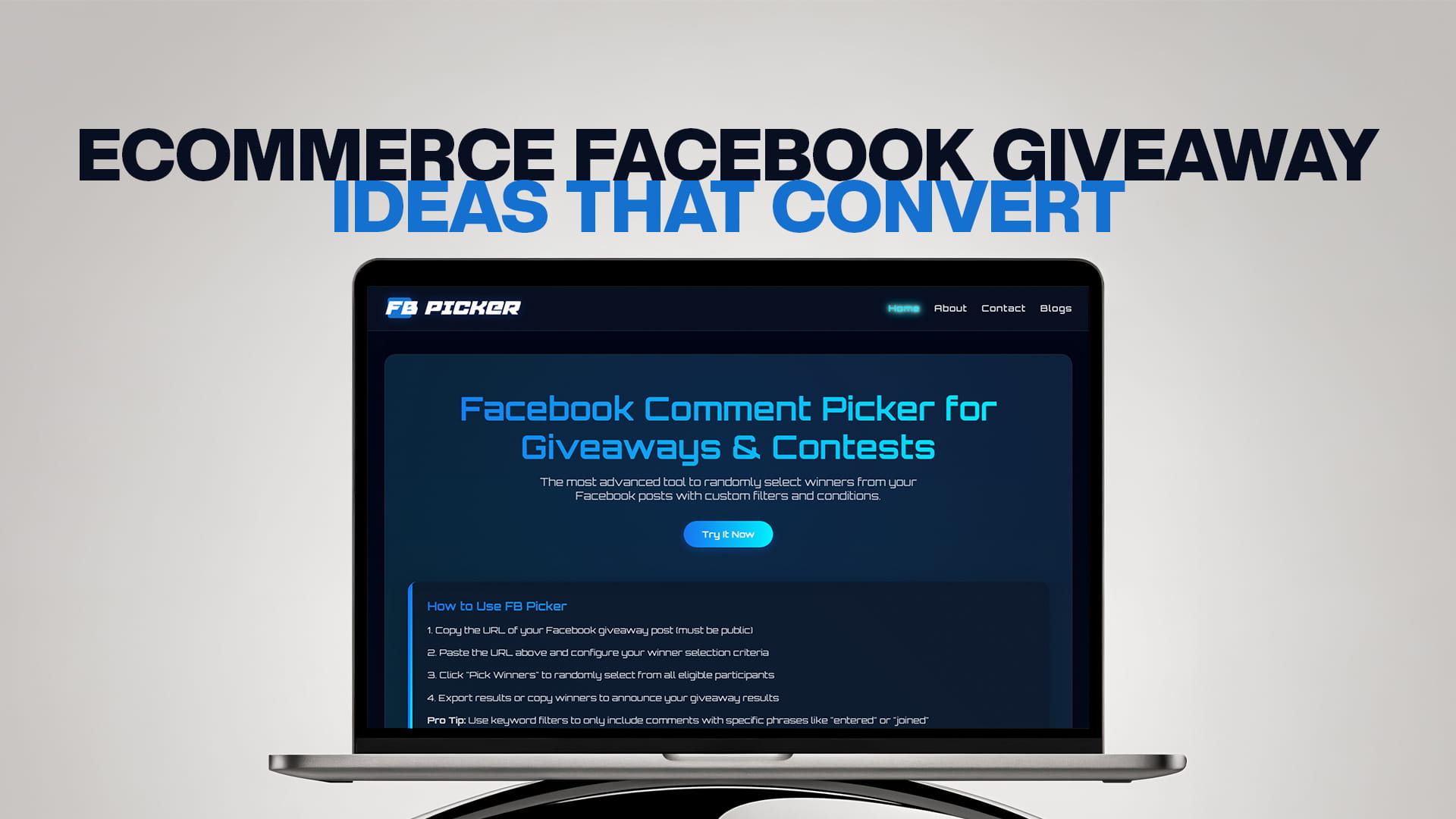
There's a conversion angle to fairness itself: the people watching your draw are the same people your consolation code is about to hit, and nobody buys from a store they just watched run a shady contest. So make the draw visibly clean. FB Picker pulls every comment from your post's public URL, no login or account, removes duplicate entries so serial commenters can't stack odds, filters by keyword if your mechanic used one, and selects the winner at random on screen with a cryptographically secure method. Record it, post the clip with the announcement, and your consolation offer arrives wrapped in trust rather than suspicion. For ideas with several prizes, like the tag-a-friend double or tiered bundles, you can pick multiple winners and backups in one pass, and export the entrant list for your records. Run it through a random comment picker for giveaways every time and the whole close, draw, record, announce, offer, takes ten minutes.
Compliance notes for stores
Two rules matter especially for ecommerce mechanics. Entry must be free, no purchase required, so any idea touching purchases (like the review contest) has to accept entries from any past customer rather than requiring a new order, and "buy to enter" is off the table entirely. And email capture must be voluntary: invite entrants to your list, but never make subscribing a condition of entry, which violates privacy rules like GDPR where consent has to be freely given. Add the standard essentials, published rules with dates and eligibility, the not-associated-with-Facebook disclaimer, comments and follows rather than required shares, and you're covered.
The bottom line
Ecommerce giveaways convert when the prize is your product, the entry action reveals what each entrant wants, and the ending delivers a targeted reason to buy while intent is hot. The twelve ideas here are variations on that single engine, pick the two or three that fit your catalog, run them on a rhythm, measure orders instead of comments, and close every one with a recorded, fair draw through the best free Facebook comment picker so the trust you build feeds directly into the sales the contest was designed to make.
Frequently Asked Questions
The "comment your pick" and gift-card cart-builder formats tend to convert best for most stores, because every entry is a declared product preference you can target with a consolation code. But the honest answer is to test two or three ideas, track code redemptions and orders per contest, and let your own numbers decide; every store's audience responds differently, and three tracked contests will teach you more than any list.
Your own product, almost always. A generic high-value prize pulls in thousands of entrants who will never buy from you, while a product prize attracts exactly the people your consolation offer can convert. More entries is not the goal; more buyers is, and a smaller thread of genuine prospects beats a huge thread of prize hunters every time.
No. Requiring a purchase turns a giveaway into a regulated lottery in many jurisdictions. Keep entry free, and drive purchases through the consolation offer after the draw instead, which converts better anyway because it reaches everyone rather than gambling on the winner.
Give every contest its own tracked discount code and count redemptions, revenue, and new email subscribers in the two weeks after the draw. Judge ideas by those numbers rather than comments or likes, and repeat the formats that win on orders.
Within an hour of announcing the winner, while the giveaway is still fresh in entrants' minds. Purchase intent decays quickly, so a time-limited code linking straight to the relevant product, sent immediately, captures far more orders than the same offer sent days later.