
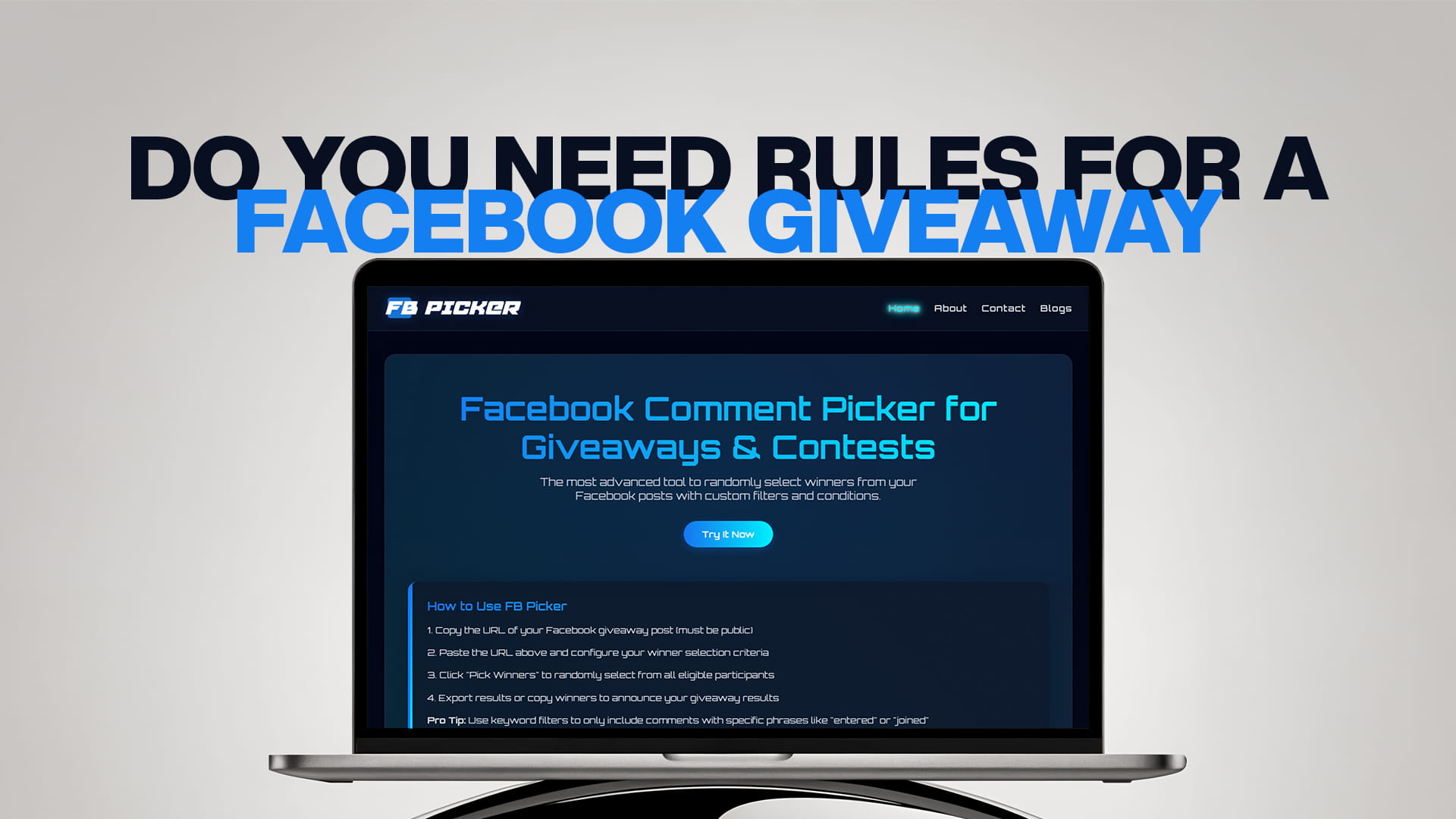
Do you Need Rules for a Facebook Giveaway
You've got a prize, a post, and an audience ready to comment. Do you really need to bother writing official rules for a simple "comment to win" giveaway? It feels like bureaucracy for something that takes thirty seconds to enter.
The honest answer is yes, you do, and not because a rulebook somewhere demands paperwork for its own sake. You need rules because they're what protect you when something goes wrong, and something goes wrong more often than you'd think: a winner vanishes, an entrant claims they were treated unfairly, someone disputes the result, or a platform or regulator asks how your promotion worked. Rules are the difference between handling those situations in one calm sentence and scrambling to improvise a fair-sounding answer after the fact. This guide explains why rules matter, what happens without them, exactly what to include, and how to write a set in a few minutes.
Why rules actually matter
Three separate forces make giveaway rules non-optional, and it's worth seeing all three, because each covers a different risk.
Platform requirement. Facebook's own promotion policy requires that giveaways include official rules and a disclaimer releasing Facebook from association with the promotion. Running without them technically breaches the platform's terms, whatever else happens.
Legal expectation. Prize promotions are regulated in most countries, and clear terms, especially the free-entry, no-purchase-necessary language, are part of what keeps your giveaway a lawful sweepstakes rather than something that strays toward a regulated lottery. In many jurisdictions, being able to show clear rules and a fair process is an expectation, not a courtesy.
Practical protection. This is the one people underrate until they need it. Rules are what let you enforce a claim deadline when a winner goes silent, disqualify a cheater, limit your liability, and settle disputes by pointing to something you published before anyone entered. Most giveaway arguments simply evaporate when the answer is already written down.
Rules aren't overhead. They're insurance you write once and reuse forever.
What happens without rules
To see why they matter, picture the situations rules quietly prevent.
Your winner never responds. Without a stated claim window, you're stuck: give them more time indefinitely, or pick someone else and risk looking arbitrary? With a rule, "respond within 7 days or forfeit," you simply follow the process.
Someone accuses you of rigging it. Without published rules and a defined selection method, it's your word against theirs. With rules stating the winner is chosen at random on a set date, plus a recorded draw, the accusation dies instantly.
An entrant breaks the spirit of the contest, spams entries, uses fake accounts, or ignores the instructions. Without rules, disqualifying them looks like you're singling someone out. With a rule reserving the right to disqualify entries that breach the terms, you're just enforcing what everyone agreed to.
A dispute escalates. Without terms, you're negotiating from nothing. With them, you point to the published rules and the conversation ends.
Someone questions eligibility, age, location, whether employees could enter. Without rules, you're inventing answers under pressure. With them, it was all decided in advance.
Every one of these is a real, common scenario, and every one is defused by a document that takes minutes to write.
What to include in your giveaway rules
A solid set of rules answers a predictable list of questions. Here's the checklist, in plain terms.
Who's running it. Your business name and a contact point (usually an email), so it's clear who's responsible.
No purchase necessary. The single most important clause. State that entry is free and no purchase is required or improves the odds of winning. This is what keeps your giveaway a legal sweepstakes.
Eligibility. Who can enter, minimum age (commonly 18+), residency or location limits, and any exclusions such as employees and their families. This prevents you from owing a prize to someone you can't legally or practically give it to.
Dates. The exact start and end date and time, with a time zone. This defines who entered in time and removes any argument about late entries.
How to enter. The precise entry steps (like, follow, comment a keyword), and any limit such as one entry per person. Clarity here prevents "but I did enter" disputes.
The prize. What it is, its approximate value, and that it's non-transferable and not exchangeable for cash unless you say so. Note any right to substitute a prize of equal value if needed.
Winner selection. How and when the winner is chosen, for a giveaway, at random from eligible entries on a stated date, using a comment picker. This is your fairness commitment in writing.
Notification and claiming. How you'll contact the winner and the deadline to respond before the prize is forfeited and offered to a backup. This is your protection against no-shows.
The Facebook disclaimer. A statement that the promotion isn't sponsored, endorsed, administered by, or associated with Facebook, and that entrants release Facebook from liability. Meta requires this, essentially word for word.
Data and privacy. That entrants' information is used only to run the giveaway, in line with your privacy policy, and that they won't be added to marketing lists without separate consent.
General terms. Your right to disqualify rule-breaking entries, to amend or cancel if necessary, and which jurisdiction's laws govern the promotion.
That covers essentially every situation a normal Facebook giveaway can throw at you. For a fill-in-the-blank version you can adapt in minutes, the free giveaway terms and conditions template walks through each clause with the wording ready to use.
Do small giveaways need rules too?
Yes, though they can be lighter. A giveaway with 30 entries and a $20 prize doesn't need the same elaborate terms as a national campaign with a car, but it needs the essentials: free entry, who can enter, the dates, the prize, how the winner is chosen, and the Facebook disclaimer. Those basics fit comfortably in a short paragraph, and they cover the situations that actually come up: a silent winner, a fairness question, a late entry.
The temptation with small giveaways is to skip rules because the stakes feel low. But the headaches- a no-show winner, an accusation of favoritism- don't scale with prize value; they happen just as easily on a small contest, and they're just as annoying to handle without a rule to point to. Match the length of your rules to the size of the giveaway, but never drop them to zero.
Where to put your rules
Rules only protect you if entrants can actually reach them, so placement matters. The cleanest approach is a dedicated rules page on your website that you link to from the giveaway post. If you don't have that, you can include the essential terms directly in the post (fine for a short set), or put them in a pinned comment, or point to a "link in bio" or a short URL on platforms where links aren't clickable in posts. What you shouldn't do is have no accessible rules at all, or bury them somewhere nobody could find, because rules nobody can read are rules nobody agreed to, which undercuts their protective value.
Keep a saved copy of the exact rules you used for each giveaway, too. If a question comes up weeks later, you want to point to precisely what was published at the time, not a version you've since edited.
Rules and the draw work together
Your rules promise a fair, random selection, and the draw is where you deliver on that promise, so the two are connected. A rule saying "the winner will be selected at random using a comment picker" is only as good as the draw that follows it. Run the selection transparently so your practice matches your published process. FB Picker works from your public post URL with no login, enforces your "one entry per person" rule by removing duplicates, and selects the winner at random on screen so you can record it as proof that you followed your own terms. If your rules provide for backup winners against a no-show, you can pick multiple winners in the same pass. Rules plus a recorded, matching draw is the combination that makes a giveaway genuinely defensible.
Common mistakes with giveaway rules
A few errors show up again and again, and each one quietly weakens the protection rules are supposed to provide.
No claim deadline. The single most common gap. Without a stated window for the winner to respond, a silent winner leaves your whole giveaway in limbo, and any eventual switch to someone else looks arbitrary. A one-line "respond within 7 days or forfeit" clause solves it.
No end date or time zone. Rules that don't pin down exactly when entries close invite "but I entered right after" disputes and make your draw timing look improvised. Always state the closing date, time, and time zone.
Skipping the Facebook disclaimer. Leaving out the "not sponsored, endorsed, or associated with Facebook" line breaches Meta's own promotion policy, even when everything else is fine.
Rules nobody can find. Writing solid terms and then burying them somewhere unreachable defeats the point, because rules entrants can't access are rules they never agreed to. Link them or include the essentials in the post.
Editing rules mid-giveaway. Changing the terms after entries have opened undermines their protective value and looks like moving the goalposts. Decide the rules before you launch, publish them, and keep a saved copy of exactly what was live.
Copying rules that don't fit. Grabbing another brand's terms wholesale can leave you in the wrong jurisdiction, with the wrong eligibility, or clauses that don't match your actual giveaway. Start from a template and fill in your real details.
Avoid those six, and your rules do the job they're meant to: quietly protecting you from every predictable problem before it starts.
The bottom line
Yes, you need rules for a Facebook giveaway, and they're less about bureaucracy than about protecting yourself when the predictable problems arrive: the silent winner, the fairness accusation, the disputed entry, the platform or regulator question. Rules are required by Facebook, expected by the law, and, most usefully, the thing that lets you handle every awkward situation by pointing to something you published in advance. Include the essentials: who's running it, free entry, eligibility, dates, entry method, prize, winner selection, notification and claim deadline, the Facebook disclaimer, and your right to disqualify; put them somewhere entrants can actually read them, and match their length to the size of the giveaway. Then deliver on the fairness they promise with a transparent, recorded draw through a dependable free comment picker and giveaway tool, and a set of rules you write once will protect every giveaway you ever run.
Frequently Asked Questions
In practice, yes. Facebook's promotion policy requires official rules and a disclaimer releasing Facebook, and prize-promotion law in most countries expects clear terms, especially free-entry language. Beyond that, rules protect you by letting you enforce claim deadlines, disqualify cheaters, and settle disputes by pointing to what you published in advance.
At minimum: who's running it, that entry is free (no purchase necessary), eligibility (age and location), start and end dates with a time zone, how to enter, the prize and its value, how and when the winner is chosen, the claim deadline, the "not associated with Facebook" disclaimer, and your right to disqualify rule-breaking entries.
Yes, though they can be shorter. A small contest still needs free entry, eligibility, dates, the prize, the selection method, and the Facebook disclaimer. The problems rules that prevent a no-show winner, a fairness dispute, a late entry- happen just as easily on small giveaways as large ones, so don't skip them entirely.
Somewhere entrants can reach them: a linked rules page on your website is cleanest, but the essential terms in the post itself, a pinned comment, or a "link in bio" all work. Rules nobody can access don't offer much protection, so make them reachable and keep a saved copy of what you published.
The "no purchase necessary" free-entry clause, closely followed by the Facebook disclaimer. Free entry is what keeps your giveaway a legal sweepstakes rather than a regulated lottery, and Meta specifically requires the statement that the promotion isn't sponsored by or associated with Facebook.